 Ryan Neufeldt
Presentations built in code
Interview talkI build presentations the same way I build apps: in code, with Claude Code. This is a silent cut of the motion work from an interview presentation.
Particle text, 3D scenes, charts, diagrams and slide transitions, all running live in the browser. The real talk has speaker notes, a jump menu and works with a clicker. Numbers and labels from my old job are swapped for sample data here.
How I work with Claude
The same four habits run through every project
Write the rules down
Every project has a written rulebook that each new session reads before touching anything, so the work stays consistent from one day to the next.
Every mistake becomes a check
When I spot a problem by eye, it gets turned into an automatic test so the same mistake can't come back unnoticed.
Label what's proven
Measured results, observations and guesses are kept apart. A model's opinion is never reported as a fact.
People stay in control
The AI proposes and a person confirms. Nothing destructive happens on its own, and there's always an undo.
WBAM
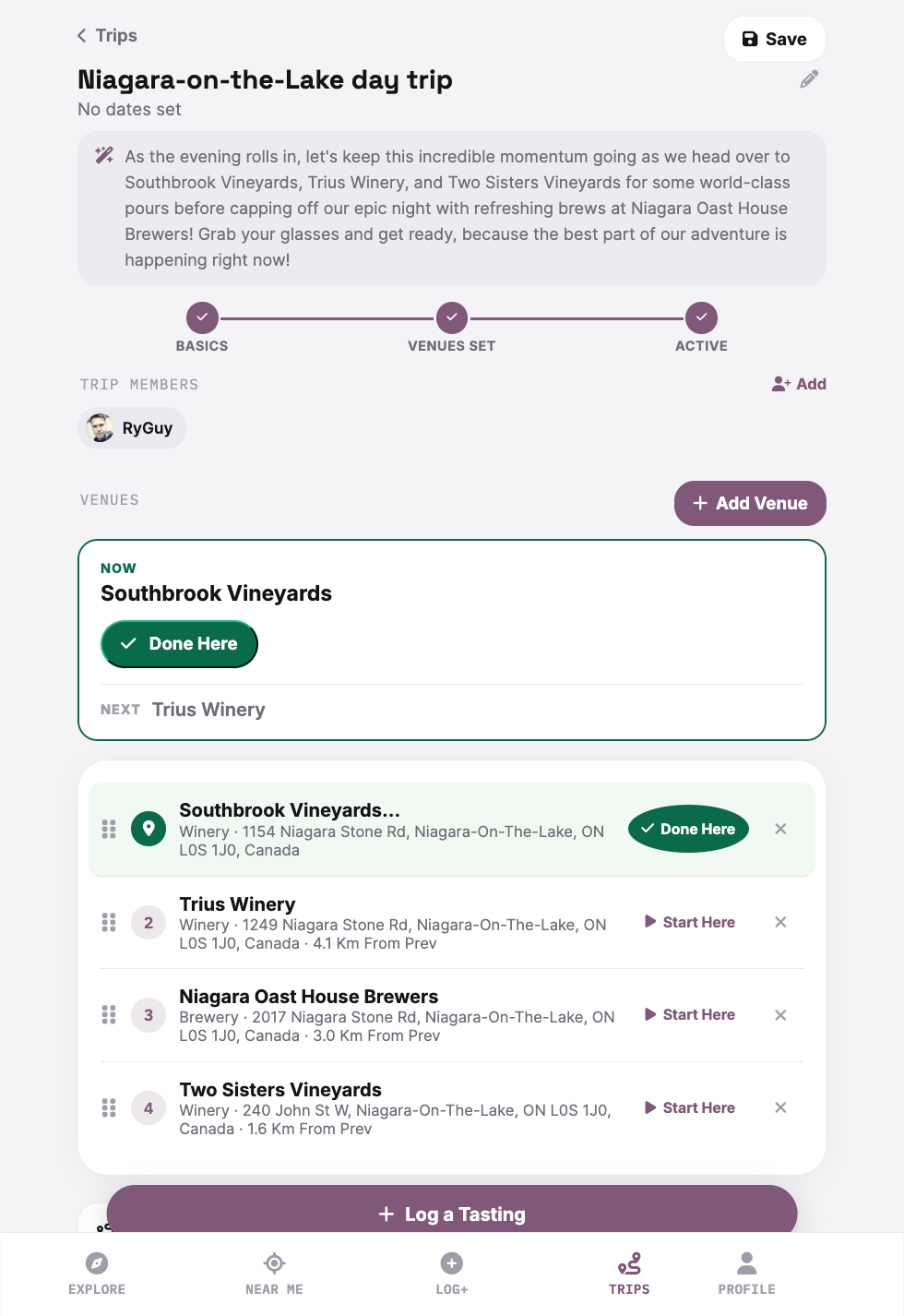
Private betaWinery, Brewery & Me: a phone app for a day out with friends. Plan the stops, log what you taste, and see who liked what.
It started as a working MVP for a real trip the following week, so the first rule was to build the right small thing. Comparing your ratings with your friends' turned out to be half the fun.
What it does
- Plans a trip and shows the active stop at a glance
- Fast tasting notes and photos, even with no signal
- Shared and blind tasting flights to compare ratings
- Replays each trip as a swipeable story
How it checks itself
A 7-second check runs before every change ships. It covers code quality, every place the app writes to the database (86 of them, so a new unchecked write fails), and recorded "known good" behaviour.
Offline is treated as normal: notes and photos wait in a queue and retry on their own until they're saved. The AI can suggest a venue, but a person always confirms it.
RAID-MA
Runs on my MacA musician's assistant. Sing or play a melody, and it writes out the notes, words and chords, then turns them into new instrument versions.
I wanted a place to turn a hummed idea into a real arrangement, using an open-source music model running entirely on my own computer. It's also conversation-design practice: the app asks one clear question at a time and tells you why it matters.
What it does
- Creates a song from an idea, a recording or a score
- Fix: correct notes or words bar by bar against your own recording
- Compares takes side by side so every version is kept
- Shows the one next step that matters most, and why
How it checks itself
When the music engine crashes, a supervisor restarts it with growing pauses and stops after repeated failures instead of looping forever. A one-line health check names the problem and the fix.
Every correction I make is saved as ground truth, and a tracker scores the app's first guess against it on songs it has never seen. Planted faults confirm the tests actually catch problems.
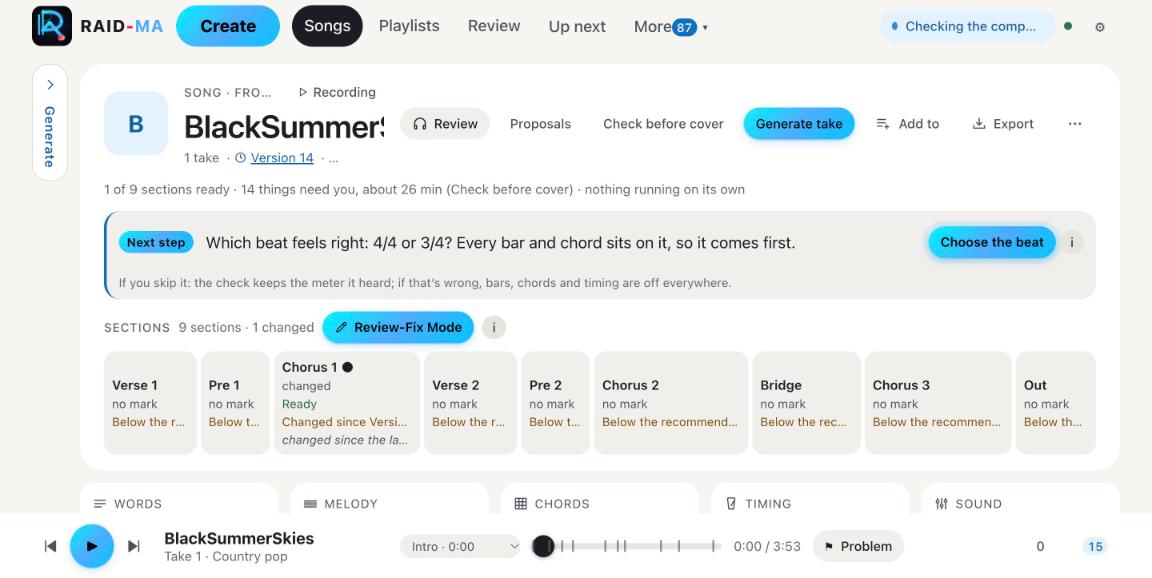
One of my own songs. The app asks which beat feels right first, because every bar and chord depends on it.
Sticker Studio
Runs on my MacDescribe a sticker in plain words, refine it in conversation, and get an animated pack ready for Signal. No art skills needed.
The goal is for people to make short, cute animated stickers for each other with local AI, so nothing leaves the computer. My first full pack of 33 stickers was tested in Signal and works.
What it does
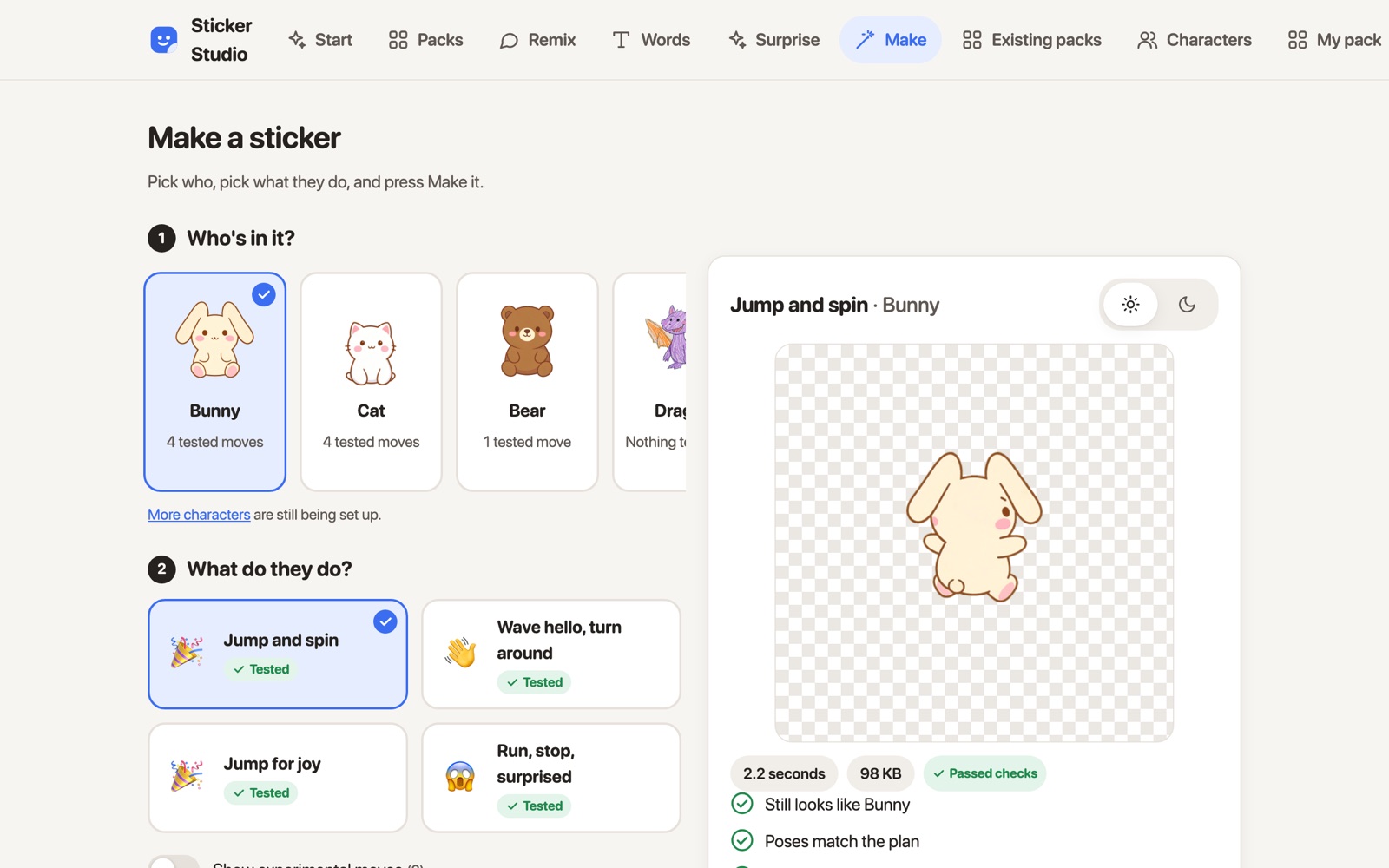
- Pick a character and a move, then press Make
- Remix adds speech bubbles, signs and sound-effect words
- New characters from a text description or a picture
- Every character shows which moves are tested and which aren't
How it checks itself
Before I see anything, each sticker has to pass guards: does it still look like the character, do the poses match the plan, do the face features stay put, and does it meet Signal's size rules.
Each time I reject something by eye, the reason becomes a new automatic check. The defect checker went from catching 7 of 57 known problems to 56 of 57.
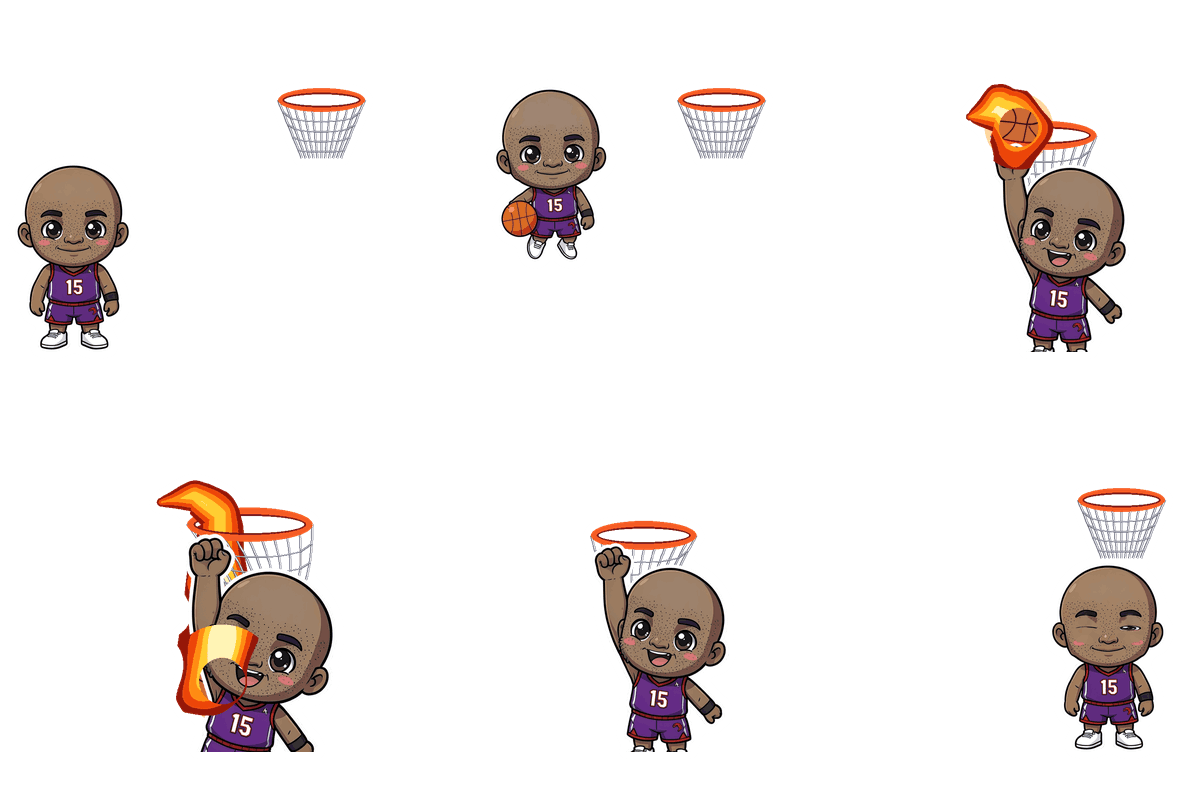

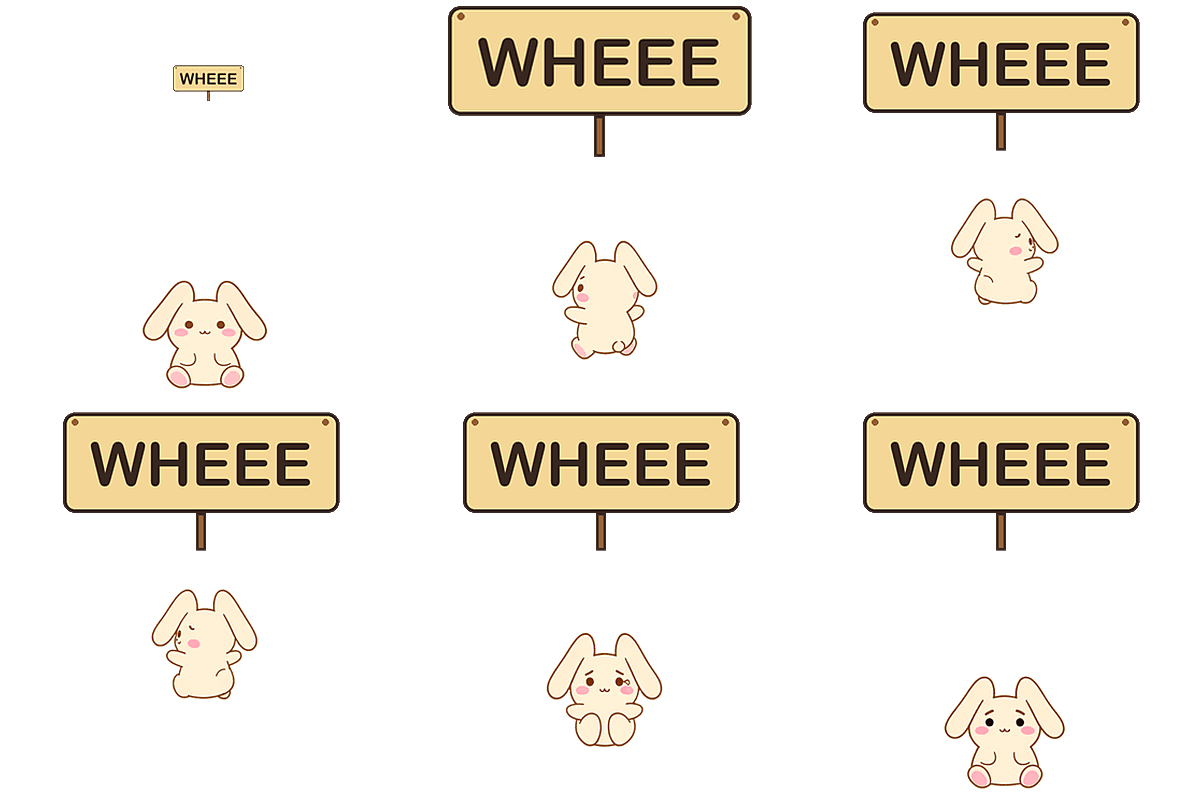
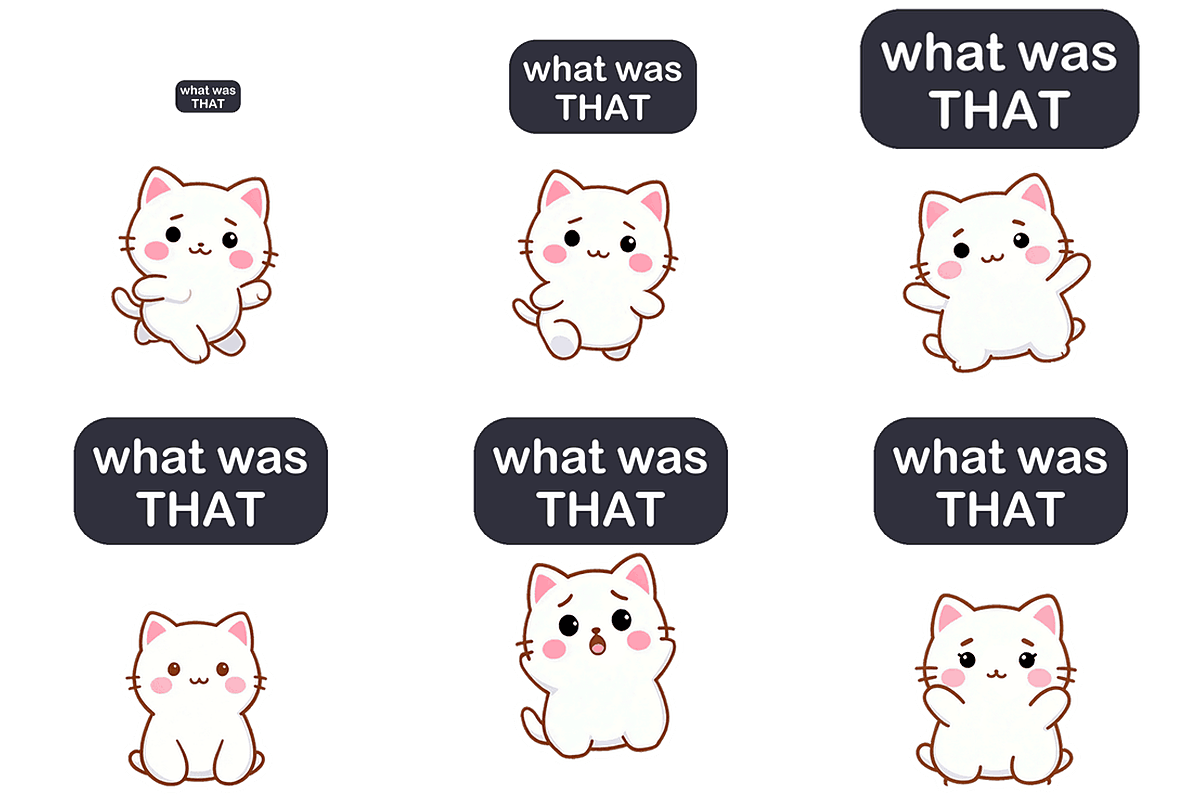

Real output, animated as it plays in Signal. The dunk is from a fan pack I made for friends.
MySites
In daily useA Chrome extension and private app that remembers what each tab was and where you left off, so you can actually close it.
I keep lots of tabs open because they act as a crude external memory system.
The goal: get down to one or two tabs without feeling like anything is lost, and find any past page in under 10 seconds.
What it does
- Continue where you left off: the chapter, episode or timestamp
- Search by meaning, like "the Autodesk job" or "manga from last week"
- Watches the series you follow and flags new episodes
- Saves and restores whole windows, with an undo for every cleanup
How it checks itself
If the database is ever damaged, the app restores the newest daily backup on startup. When I measured the local AI queue and found 98% of calls timing out, I added rules: failing pages wait 24 hours, three failures pause the worker, and it backs off when the Mac is busy.
Closing tabs always goes snapshot, confirm, verify, then offers Undo.
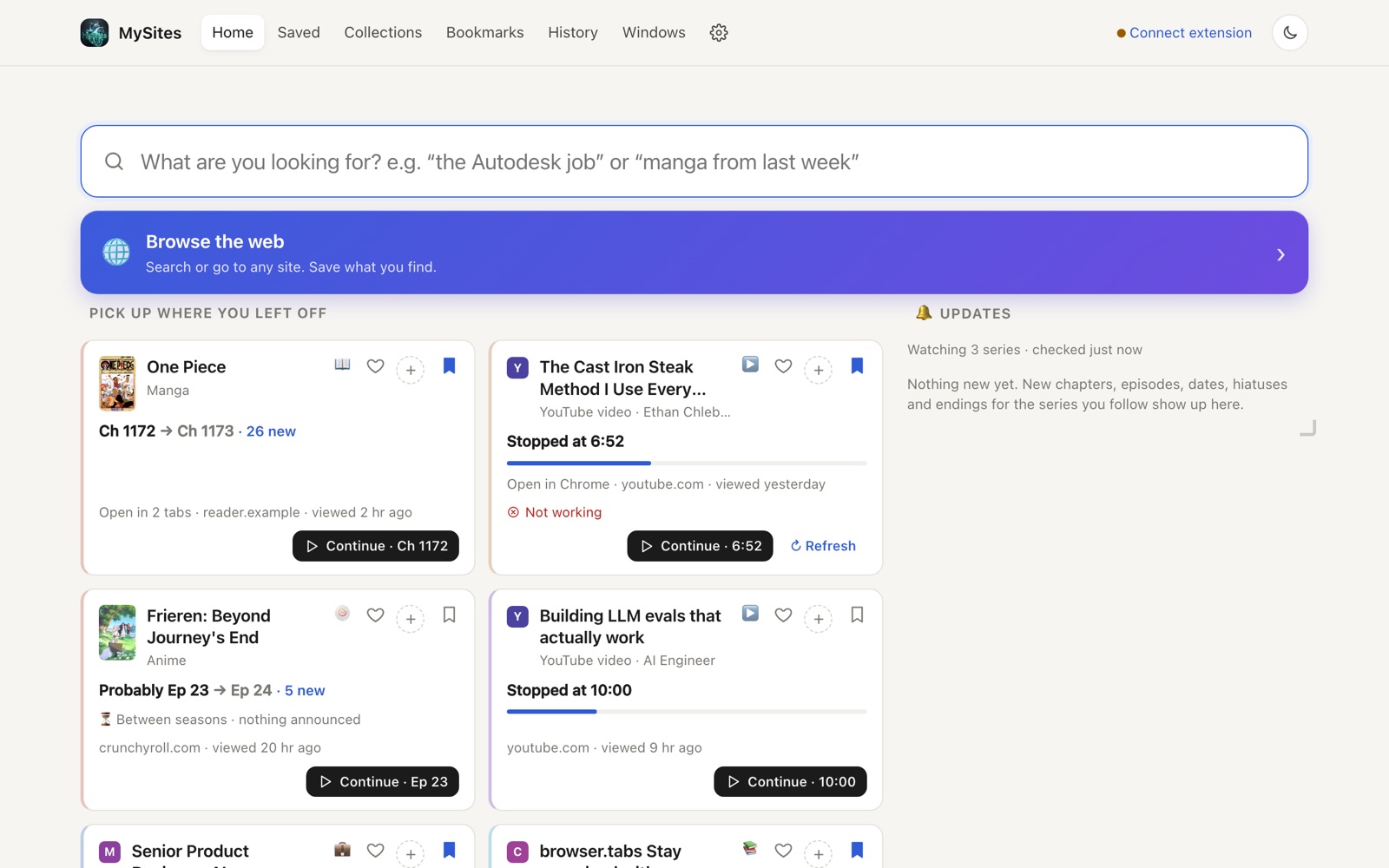
Shown with the demo library, not my real browsing.
Career Agent
Running weeklyMy own job-search system, built as Claude Code skills. It finds roles, scores them honestly, tailors applications and tracks every step.
The goal is simple: find a job I want, faster, with applications that get better every week. It drafts but never submits; I review and send everything myself.
What it does
- Weekly search across job boards, checking each posting is still live
- Scores fit and interest, and names the gaps honestly
- Tailors a resume and cover letter from verified facts only
- A dashboard of what to do next, rebuilt on every change
How it checks itself
A watchdog checks every 20 minutes: if the Monday search didn't run and the internet is up, it runs it and sends a notification. A free role watcher scans job boards three times a day without using any AI tokens.
A learning loop captures every lesson, sorts it by type and writes it into the right rule file. A consistency check flags any copy of a rule that has drifted.
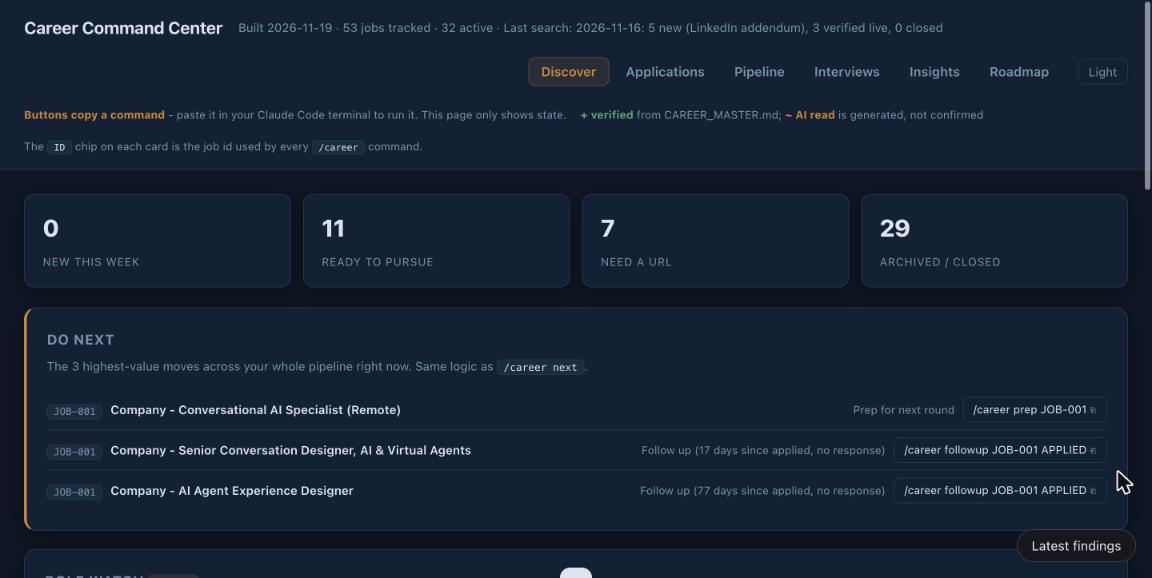
Company names are hidden.
Want to see one run?
I'm happy to walk through any of these live
Most clients don't need a music studio. What carries over is the method: start from the real problem, ship something small that works, and build in the checks that keep it honest as it grows. That works just as well for a demo, a prototype or a presentation.